
A Visit from Chinggis Khan
Sometimes the Mongols Come to Me

On a near daily basis, I take mental trips to the Mongol Empire, imagining 13th Century warriors and camp followers as they travel across the steppe toward Europe. In April, the Mongol Empire arrived in Prague to me in the form of the Chinggis Khan exhibit at the Czech National Museum. The museum is now hosting two millenia of artifacts documenting the Mongol Empire and its predecessors. The exhibit, with items on loan from the Chinggis Khaan National Museum in Ulaanbaaatar, Mongolia, and the Institute of Archaeology of the Mongolian Academy of the Sciences will be in Prague until June 22nd.
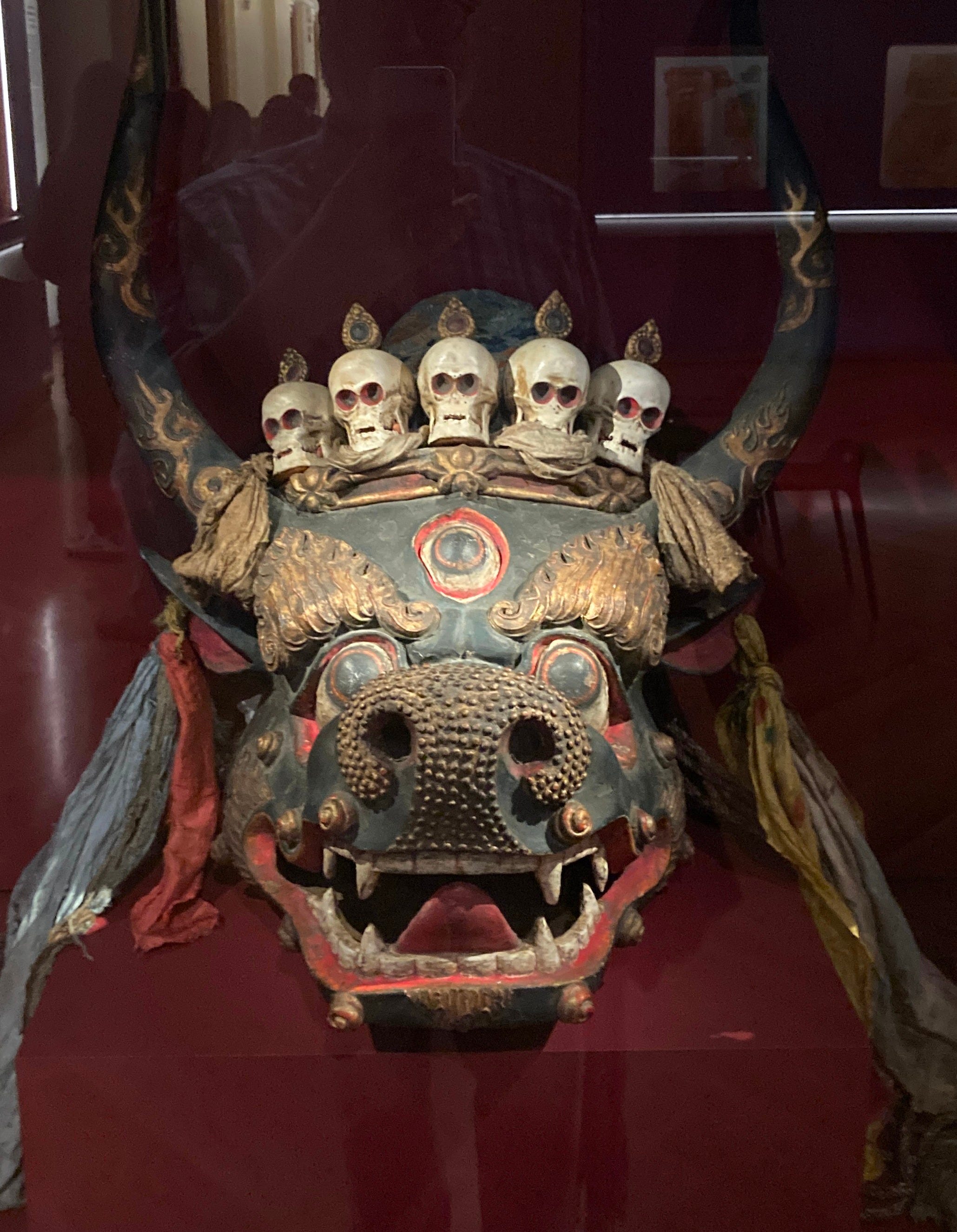
Last week, I took what I hope to be the first of a couple of visits to the exhibit. For Mongol Empire novices and a Mongol Empire student like myself there was plenty to inform and entertain, including a mask of Yama, the god of death who must submit to the Yamantaka (a cool story told in Chapter Two).
The exhibit supports the premise that the more people know about the Mongol Empire, the more people can recognize both its and our brutality and enlightenment.
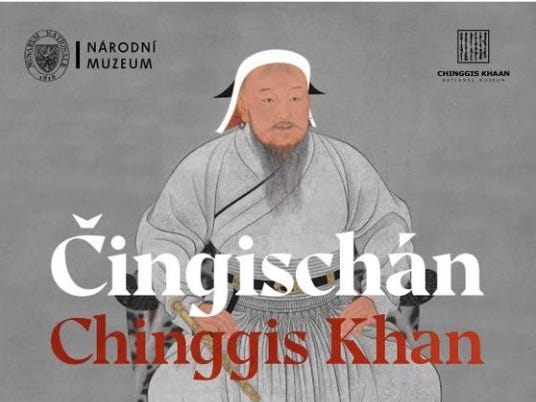
From the exhibition guide Chinggis Khan (ed. Helena Heroldová, Národní Muzeum, 2025):
The centralized government and tax collection that Mongols introduced influenced the development of all conquered regions in the following centuries. The Mongols generally encouraged trade and crafts, which led to rebuilding of cities and the development of trade routes. Religious tolerance permitted the coexistence of different religions, leading to rich cultural exchange.
Even the most tragic consequences of the Mongol invasion had some positive outcomes. It’s probable that the Mongol army and increased trade led to the 14th Century’s Black Death, which eliminated one-third of Europe’s population, which led to a decreased influence of a corrupt and restrictive established church, and to the increased value of labor, and to a relative increase in wealth. Rather than being part of an unknowable and irreconcilable East, the Mongols were somehow integral to the development of the Western World.
Despite the universal message of humanity’s duality, I sometimes consider my study of the Mongol Empire a niche interest, like my fascinations at 13 years: comic book super heroes, The Lord of the Rings, and model rockets. One boy’s enthusiasm, though, might be next year’s blockbuster or some billionaires’ kicks.
Westerners have always been fascinated by stories of the Mongol Khans, the Silk Road, travelling monks, and Marco Polo. Perhaps after having the amassed the largest contiguous empire in history and the passing of 800 years, the Mongol Empire is working toward its blockbuster status. Next you know, there’ll be car decals with a little Mongol warrior peeing on something.


I was prepared to like the exhibit and project my own partisan feelings about things Mongol, but something else happened. There was something ritualistic and incantatory about making the rounds at this exhibit, something akin to a meditative experience, say, a Buddhists’ intentional walk, hands behind the back, or standing and leaning in to read the texts. I imagined a nomad imagination captivated by the characters of the wolf and the deer, the great blue sky god Tengri and nurturing mother earth. But among the myths was the material: unearthed pots, bowls, ceramic jugs, ornaments and tools; the hearth the arrows, the grains, the stirrup, and the yurt. How much could I imagine this intertwining of myth and matter?
Endlessly, as it turns out. But as I’ll write in my next entry, that might not be enough.